Sunday, September 2, 2012

Along the road to Ballyliffin

The narrow two-lane highways around Ireland are only scary when winding around a curve at fast speeds with an on-coming truck coming the other way at an equally fast if not faster speed. Sometimes negotiating a harrowing turn-about (traffic circle) one finds oneself on an efficient four-lane. Nevertheless, it's a treat to wind through the picturesque countryside with its patchwork quilt of farmlands and cute homes linked together with stonewalls.


Along the way, we came across a scenic outlook of Loch Key with its own scenic highlight, a sculpture of a majestic Gaelic Chieftain.


William Butler Yeats is buried at Drumcliffe at St. Columba church.


 Then north all the way to the northern part of Donegal to Ballyliffin.


Friday, August 31, 2012

The Emerald Isle

Before the days of global warming, it was said that Iceland was named to scare away faint-hearted intruders. Well, this reporter can say the sun does shine in Ireland. But, just like Seattle with its legendary rain, the lush greenery here is a reminder that this is not a desert environment.


We were greeted in Shannon with a gorgeous day and the lovely Ailbhe (pronounced Alva) who made the long drive from Galway to deliver us there. The scenery along the way was picturesque with amazing stone walls neatly defining spaces and serving as a reminder how rocky this lush land is/was. Nevertheless, the sheep and cows looked very contented and the roads didn't seem perilous at all.

Galway (or Gaillimh) is a very cute town. Wiki says the population is about 76,000. It definitely has a cosmopolitan feeling.


Christopher Columbus stopped here before heading west. More recently, it was a host to the 2012 Volvo Ocean racers. And there are Thai, Indian and even a Japanese restaurant!


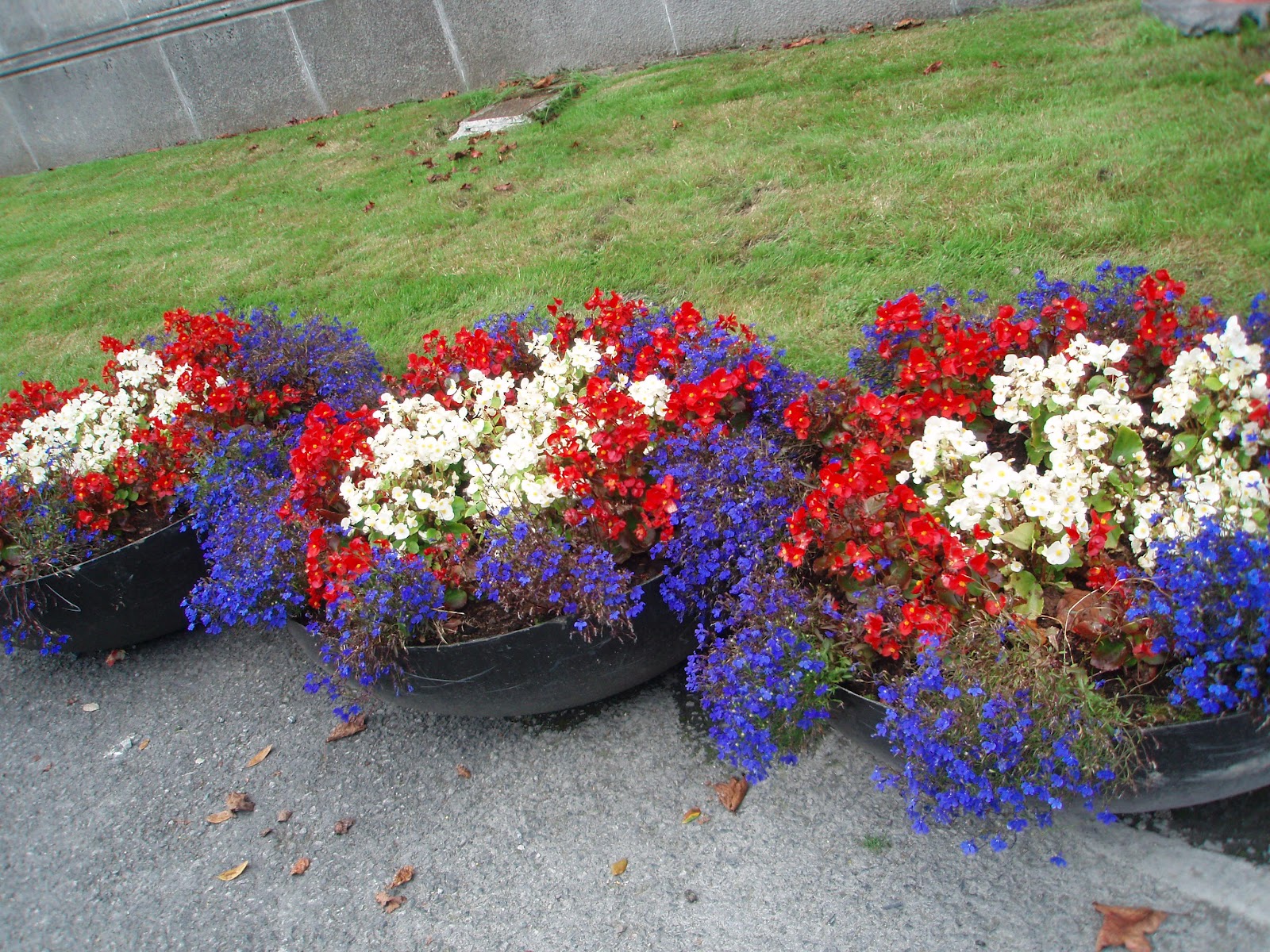
 But, it retains its own character with amazing flowers and greenery and architecture.


Wednesday, August 29, 2012

My Irish eyes are smiling...

When I was growing up, I was very aware of my secret Irish roots. Every St. Patrick's Day, my mother would make corned beef and cabbage, never mind that it was served with gohan (rice) and ocha (Japanese tea). Whenever anyone talked about my brothers and me, it sounded like the start of a very good joke..."John, Pat and Mike are eating dinner..." (you can add in the punch line).

So, after visiting 36 other countries, it's time to visit my other homeland. And, off I go to check out the reality versus the mythology, the truth versus the blarney, the contemporary, the historic, the magic, the arts and the crafts.

I've braced myself for the rainy weather, the limited culinary selections, traveling on treacherous back roads by car, etc. but am very excited to see the rustic towns, old castles, beautiful scenery and escape the election-year nonsense here in the US.

Tuesday, July 17, 2012

2012 Obon: honoring our ancestors

For all that I am able to do, I owe a tremendous debt to those who came before me. My parents gave me love, security and education. My grandparents gave me strength and determination and, from their forebears, we get our identity and resolve.

Obon is an annual Japanese Buddhist festival to honor our ancestors. Each village/community has its own Obon and each Obon takes on the character of the community. I grew up attending Obon in Seattle, held over two evenings in July during Seattle's Seafair festivities. New York's is now held on 42nd Street in Bryant Park (previously in Riverside Park) on the second Sunday in July during the height of the afternoon heat.


For years, I've talked about going to Seabrook's Obon but I've just never made it until this year!! Seabrook in New Jersey is a historic site. Seabrook is one of the top three places that Japanese-Americans (Nikkei) were able to relocate to from the World War II internment camps. Charles Seabrook needed workers to replace the workforce who involved in the war effort. Other Nikkei left the camps for Chicago, which offered domestic work at first but also faced with a depleted workforce, other employers found the relatively well-educated Nikkei to be stable source of loyal employees. Still others found employment as chicken sexers in Georgia/Arkansas, a valued skill at poultry farms and, apparently, something that Nikkei are especially adept at.

My mother left Minidoka camp in Idaho to go to Cincinnati and then Chicago. My father served in the US Army. My grandparents remained in camp (my maternal grandfather died there) while other relatives moved briefly to Boston or permanently to Minnesota or Chicago. After the war, most returned to the West Coast. To find a list of people who were in the camps, go to www.japaneserelocation.org/index.php?page=directory. Although none of my family went to Seabrook, I've wanted to learn more about this small community.

At its peak, Seabrook's Nikkei population was about 3,000 but diminished over the years. Japanese-Americans and Japanese-Peruvians were later replaced by wartime refugees from Europe, migrant laborers from Appalachia, the South, and the Caribbean. The Seabrook Educational and Cultural Center, www.seabrookeducation.org, depends on volunteers to tell their first-hand accounts of life at Seabrook farms.


Seabrook Farms is still busy at work processing vegetables from NJ, NY, PA, DE and beyond.
But, the highlight of the day was Obon Matsuri. I was expecting a small affair. People had told me that not many Nikkei remain in the area; that I should go to dance and wear a yukata because there weren't many participants. So, I was blown away as we approached the temple. There were many cars parked and lawn chairs/blankets ringed the grassy field. There were booths selling food and beverages, etc.  How festive!!

If you visit Seabrook Buddhist Temple, take time to see their Meditation Garden.


My cousin Ellen and her family, Eric, Tai, and Chi made the trip over from Philadelphia. As did the regular bus load and car caravan from New York including dancers and drummers.

It was truly a memorable, moving event especially as the Seabrook community joined in the odori dancing.

Tuesday, November 22, 2011

From the woods of Argentina to the pine forest on Broadway

Alas, no matter how much fun one is having it is always good to come home.

Cordoba provided a nice way to start the transition back. Although it is the second-largest city (according to Wikipedia) in Argentina, it has the feeling of a big town. But, it has much of whatever you might want. Alisa and Guillermo were able to find things that are harder to get in San Marcos and I was able to see some sights and buy souvenirs and gifts.


At the crafts market


Obligatory phone booth photo


Saying goodbye at the airport


Then it's the long trip back and a return to NYC to find that a forest of Vermont-grown pine trees have sprouted up outside my home. It smells great but reminds me that the holidays are near and I'm not ready for the year to end.

Sunday, November 20, 2011

Ciao, San Marcos

It's sad to say goodbye to San Marcos. But, Alisa and Guillermo are driving me to Cordoba so I don't have to say goodbye to them yet.

San Marcos is a very cute town with unpaved streets. The water truck comes by several times a day to spray the dusty streets but even in the spring sun, the streets dry as soon as the truck passes.
The bike that I rented for the week takes me everywhere I need to go. The dirt road with the small hills to Alisa's place was treacherous to negotiate between the washboard middle and the soft dirt sides with a one-speed bike. I spun out a couple of times. But, I was able to trade it in for a 18-speed of which the middle five worked and I got up and down the soft hills.
The dogs liked to bark and chase after me until I manage to collide with one that was running after a little boy. I saw and avoided the boy but ran square into the dog. After that the dogs stayed clear of me. Of course, that just could be that they became familiar with me but I'd like to think that I gained a reputation in the doggy network.

Leaving San Marcos, we took a scenic road to Cordoba and passed a mother pig and her little piglets.

Friday, November 18, 2011

Muy deliciosas


Friday: another yogurt-making day! Alisa is preparing for Saturday Market Day in San Marcos. So am I. It's always fun to check out the local market and see what the area artisans are selling.

But, alas, on Saturday, there was a much-needed, spectacular ice/rain storm which deposited marble-sized hail and left the area without power for about six hours. So, although the other artisans stayed home, Alisa delivered yogurt to most of her regular customers.


Sharing time with Alisa wouldn't be complete without some quality cooking (and eating) time. The local foods make tempting vitals and we have had wonderful meals including: home-cured olives, hummus with ginger, an asado barbeque, roasted veggie dip, etc.


And, homemade pasta made with freshly laid eggs.


On Friday, Alisa learns the finer points on composting for dry toilets from Adrian.


During a hot day, a dip in the backyard pool is so refreshing


As we prepare to leave San Marcos for Cordoba, here are a few "before" photos for which Alisa will have to share the "after" photos for their in-progress work in the woods.

The living room


The dry toilet area


Worm composting (food disposal unit)